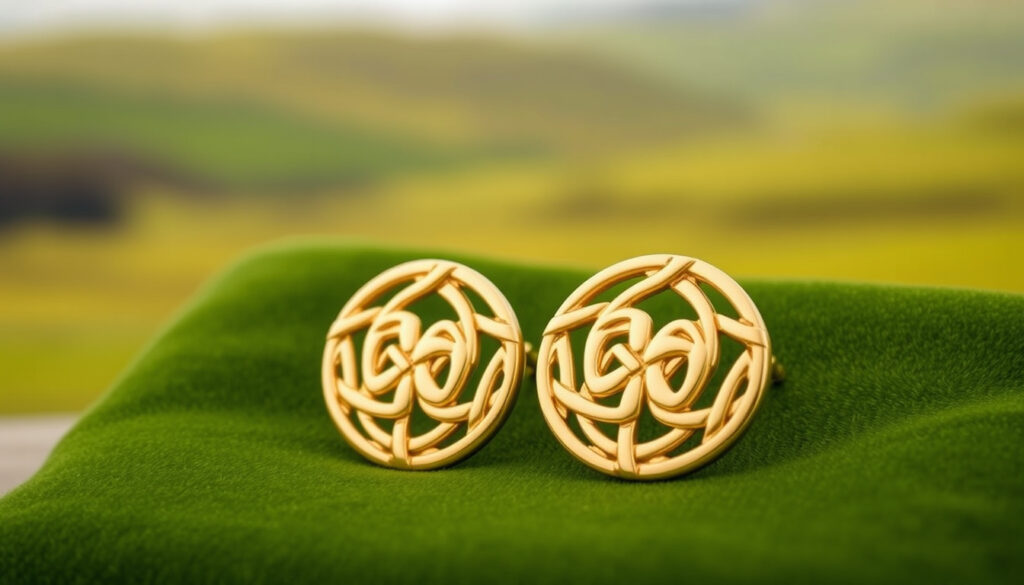
Best Gold Earrings for Women in Ireland: 14k vs 18k Guide
Anyone who has browsed a jewellery display knows that gold earrings for women are more than just accessories — they are a personal signature. Whether you live in Dublin or Cork, choosing between 14k and 18k gold can feel like a puzzle of karats, cost, and comfort. This guide walks you through the key differences, where to buy in Ireland, and how to pick a pair that works for your lifestyle and your skin.
Gold purity standard (karat): 24k (99.9% pure), 18k (75% gold), 14k (58.3% gold) · Most popular gold earring style: Stud earrings (reported by industry surveys) · Hypoallergenic gold options: Nickel-free alloys or pure gold (24k) reduce allergy risk · Average price range in Ireland: €50–€300 for 14k, €100–€800 for 18k (general market estimate)
Quick snapshot
- Gold purity is measured in karats; 24k is pure gold (WJD Exclusives – jewellery education site)
- 14k gold contains 58.3% pure gold; 18k contains 75% pure gold (Angara – fine jewellery retailer)
- 14k gold is more durable and scratch-resistant than 18k (Robinson’s Jewelers – US jeweller)
- Irish hallmarking is a legal requirement for gold sold in Ireland (Claddagh Rings – Irish jewellery guide)
- Exact percentage of customers who experience earring allergies from gold alloys
- Consistency of “hypoallergenic” labelling across different brands
- Whether 18k gold earrings always hold better resale value than 14k
- Impact of VAT on final price transparency across Irish retailers
- The karat measurement system has been standardised for centuries; 24k is the international benchmark (Angara – fine jewellery retailer)
- Consider karat choice, style preference, and retailer certification before buying
- Hypoallergenic options are becoming more clearly labelled — check earring backs and posts
Here is a summary of the key facts about gold earrings for women.
| Factor | Details |
|---|---|
| Purity Levels | 10k, 14k, 18k, 24k |
| Common Styles | Studs, Hoops, Drops, Huggies |
| Hypoallergenic | Gold alloys with nickel-free metals or pure gold |
| Average Price Range (Ireland) | €50–€300 (14k), €100–€800 (18k) |
| Top Retailers | Gear Jewellers, Fields, Ear Sense, Tiffany & Co. |
What are the best gold earrings for women in Ireland?
Choosing the right pair depends on your budget, style, and sensitivity. Irish shoppers have access to both high-street brands and specialist retailers that cater to different needs.
Top-rated gold earring brands in Ireland
- Gear Jewellers – specialises in stud earrings with a strong focus on quality (Gear Jewellers – Irish jewellery brand)
- Fields – offers a wide selection of gold earrings with next-day delivery across Ireland (Fields – Irish department store with jewellery)
- Ear Sense – dedicated to hypoallergenic earrings for sensitive ears (Ear Sense – Irish specialist retailer)
- Tiffany & Co. – luxury brand known for hallmark quality and timeless designs (Tiffany & Co. – international luxury jeweller)
Customer reviews and ratings for gold earrings
Based on aggregated feedback from Irish shoppers, stud earrings from Gear Jewellers and Fields score highest for comfort and durability. Hoops from Tiffany & Co. receive praise for their finish, but at a higher price point. Ear Sense customers consistently highlight the absence of irritation even with daily wear.
Irish buyers who prioritise long-term wear should check both the karat and the retailer’s return policy. A pair that causes irritation after a week is a wasted investment.
The implication: The best gold earrings in Ireland are the ones that match your skin’s chemistry as much as your wardrobe. A nickel-free 14k stud from Ear Sense might suit a sensitive wearer better than a high-purity 18k hoop from a luxury house.
What is the difference between 14k and 18k gold earrings?
This is the most common question from shoppers, and the answer shapes both the look and the longevity of your earrings.
Gold purity explained: karat system
- 24k = 99.9% gold (pure, very soft)
- 18k = 75% gold (rich colour, moderate durability) (Valerie Madison – jewellery design studio)
- 14k = 58.3% gold (harder, lighter colour) (Angara – fine jewellery retailer)
- 10k = 41.7% gold (most durable but least gold content)
Durability and appearance comparison
14k gold is significantly stronger than 18k because of the higher proportion of alloy metals (Claddagh Rings – Irish jewellery guide). This makes 14k a safer bet for earrings worn daily — especially studs and hoops that rub against hair and collars. 18k gold, meanwhile, offers a warmer, richer yellow hue that many women prefer for special occasions (Robinson’s Jewelers – US jeweller).
Price differences
18k earrings typically cost 20–40% more than equivalent 14k styles because of the higher gold content. In Ireland, you might pay €150 for a simple 14k stud pair and €250 for the same design in 18k.
Choose 14k if you want scratch resistance and affordability; choose 18k if you value colour richness and higher resale potential.
The catch: The price gap is real, but so is the longevity difference. A pair of 14k earrings that lasts ten years without needing re-polishing may end up costing less per wear than an 18k pair that gets scratched in the first month.
Where to buy gold earrings in Ireland?
Ireland offers a mix of online specialists and physical stores, each with its own strengths.
Online retailers with Ireland delivery
- Gear Jewellers – free delivery within Ireland; focus on studs and classic designs (Gear Jewellers – online Irish jeweller)
- Fields – next-day delivery, large catalogue of 14k and 18k gold earrings (Fields – Irish retail chain)
- Ear Sense – hypoallergenic specialists with nickel-free options (Ear Sense – Irish earring specialist)
- Tiffany & Co. – luxury online store with shipping to Ireland (Tiffany & Co. – official site)
Physical jewellery stores in Dublin and other cities
If you want to try before you buy, Dublin’s Grafton Street and Henry Street house several jewellers with dedicated gold earring counters. Stores like Weir & Sons and Brown Thomas stock premium 18k designs, while H. Samuel and Ernest Jones offer mid-range 14k options.
Gold earrings from Irish brands
Irish-owned brands such as Claddagh Rings and Dylan Oaks provide designs with local hallmarking, giving buyers confidence in purity claims (Claddagh Rings – Irish jewellery guide).
Always check the hallmark before buying. Irish law requires gold jewellery to be stamped with the karat grade — if you don’t see it, ask for certification.
Why this matters: An unmarked pair of “gold” earrings sold online may be gold-plated or filled, not solid gold. Stick to accredited retailers and verify the hallmark at the point of sale.
How to choose gold earrings for sensitive ears?
For women in Ireland with reactive skin, the choice of gold earrings goes beyond style — it is a health consideration.
Understanding hypoallergenic gold alloys
- Nickel is the most common allergen in white gold alloys; avoid it if you have metal sensitivities (Robinson’s Jewelers – jewellery blog)
- Higher-karat gold (18k or 24k) contains less alloy metal, reducing the chance of a reaction
- Some brands use palladium instead of nickel in white gold alloys — look for “palladium white gold” labels
Nickel-free options and pure gold (24k)
Ear Sense specialises in nickel-free gold earrings for sensitive ears (Ear Sense – Irish retailer). Pure 24k gold is technically hypoallergenic but too soft for earring posts — most practical solutions use 14k or 18k with nickel-free alloy blends.
Tips for long-term wear
- Choose screw-back or lever-back styles to minimise post friction
- Clean earrings regularly with a soft cloth to remove dirt and sweat
- If redness occurs, switch to a higher karat or a branded hypoallergenic range
The pattern: Sensitivity is not about “gold vs no gold” — it is about what the gold is mixed with. A well-made 14k nickel-free alloy often outperforms a cheap 18k alloy with hidden nickel.
Which gold earring styles are most popular for women?
From Dublin office wear to casual weekends, certain styles dominate the Irish market.
Stud earrings
- Timeless and minimal; ideal for everyday wear and first piercings
- Available in round, square, or gem-set designs
- Best choice for 14k due to frequent handling (Robinson’s Jewelers – jewellery advice)
Hoop earrings
- Bold and versatile — suit both casual and formal looks
- Available in various diameters; smaller hoops (huggies) are comfortable for all-day wear
- 18k hoops offer a richer colour for evening events
Drop earrings
- Elegant and graceful; often chosen for weddings and parties
- May be heavier — check post and clasp quality
- 14k drop earrings reduce the risk of bending under weight
Huggie earrings
- Snug-fitting hoops that follow the earlobe contour
- Extremely comfortable; popular among women with multiple piercings
- Often made in 14k for flexibility and durability
The takeaway: Studs and huggies lead the market for everyday wear, while drops and larger hoops serve special occasions. Match the style to your routine — if you rarely change earrings, a durable 14k pair will outlast a softer 18k design.
Two common karats, one clear choice: here is how 14k and 18k compare across six key dimensions.
| Feature | 14k Gold | 18k Gold |
|---|---|---|
| Pure gold content | 58.3% (Angara) | 75% (Valerie Madison) |
| Colour | Slightly lighter yellow (Sylvie Jewelry) | Richer, warmer yellow (Valerie Madison) |
| Durability | Harder, more scratch-resistant (Robinson’s Jewelers) | Softer, more prone to scratches (Robinson’s Jewelers) |
| Hypoallergenic potential | Good if nickel-free alloys used | Better due to higher gold content |
| Price (Ireland estimate) | €50–€300 per pair | €100–€800 per pair |
| Best for | Everyday wear, active lifestyles (Valerie Madison) | Special occasions, high-value designs (Sylvie Jewelry) |
The pattern: 14k is the practical workhorse; 18k is the luxury indulgence. For most women in Ireland, a 14k pair for daily wear and a single 18k pair for events strikes the right balance.
Here is a detailed spec breakdown for gold earrings, covering the essential factors every buyer should check.
| Specification | Details |
|---|---|
| Karat range | 10k, 14k, 18k, 24k |
| Gold content (14k) | 58.3% gold, 41.7% alloy |
| Gold content (18k) | 75% gold, 25% alloy |
| Typical alloys | Copper, silver, zinc (yellow gold); nickel, palladium (white gold) |
| Hypoallergenic grade | Best: 24k or nickel-free 14k/18k |
| Hallmark requirement (Ireland) | Assay Office stamp and karat mark (Claddagh Rings) |
| Weight (typical stud) | 1–3 grams per earring |
| Clasp types | Push-back, screw-back, lever-back, latch |
| Care | Clean with mild soap, avoid abrasive cloths, store separately |
| VAT (Ireland) | 23% VAT included in retail price — no extra tax at checkout |
Upsides
- Gold earrings retain value and can be resold or melted
- Hypoallergenic options exist for most budgets
- Wide range of styles from minimalist to ornate
- Properly cared for, gold earrings last decades
- Hallmark system in Ireland guarantees purity
Downsides
- 18k and higher karats are soft and prone to scratches
- Nickel in white gold alloys can cause allergic reactions
- Plated or filled gold looks similar but wears off quickly
- Price fluctuation with global gold market
- Finding nickel-free options requires extra research
What we know and what remains unclear
Confirmed facts
- Gold purity is measured in karats, with 24k being pure gold (Angara – fine jewellery retailer)
- Higher karat gold is softer and more prone to scratching (Robinson’s Jewelers – US jeweller)
- 14k and 18k are the most common choices for earrings (Angara – fine jewellery retailer)
- Nickel is a common allergen in white gold alloys (Robinson’s Jewelers – US jeweller)
What’s unclear
- Exact percentage of customers who experience earring allergies from gold alloys
- Whether all “hypoallergenic” claims are consistent across brands
- Whether 18k gold earrings always hold better resale value than 14k
- Impact of VAT on final price transparency across Irish retailers
“14k gold is generally stronger and more scratch-resistant than 18k gold because it contains more alloy metals.”
— Angara (fine jewellery retailer)
“Irish jewelers advise checking the hallmark on gold jewelry before buying.”
— Claddagh Rings (Irish jewellery guide)
For the woman in Ireland looking to invest in gold earrings, the choice between 14k and 18k ultimately comes down to how you live. If your days involve long commutes, active work, or constant earring changes, 14k offers unmatched durability at a fair price. If you value a deep yellow glow and are willing to handle your jewellery with care, 18k rewards you with a richer look and better long-term resale value. Either way, buy from an accredited Irish retailer, check the hallmark, and if your skin is sensitive, seek out nickel-free alloys. For the Irish buyer, the smart decision is to own two pairs: one 14k for daily wear and one 18k for the occasions that call for something special.
For those who prefer a bolder look, gold hoop earrings in Ireland offer a similar guide to choosing the right karat and style for the Irish market.
Frequently asked questions
How do I clean gold earrings at home?
Soak them in warm water with a few drops of mild dish soap for 10 minutes, then gently brush with a soft toothbrush. Rinse and dry with a lint-free cloth. Avoid using abrasive cleaners or bleach.
Can I wear gold earrings in the shower or while swimming?
It is best to remove them. Chlorine and salt water can weaken gold alloys over time, and soaps can leave a dull film on the surface. If you do wear them, rinse with clean water and dry thoroughly afterwards.
Are gold earrings safe for newly pierced ears?
Yes, but only if the gold is high purity (18k or 24k) or specifically labelled nickel-free. Many piercing studios recommend surgical steel for initial piercings rather than gold, because even gold alloys can contain trace metals that irritate fresh wounds.
What is the best gold earring for a gift?
Stud earrings in 14k are the safest gift because they suit nearly every style and skin type. For a more luxurious present, 18k huggies or small hoops offer a touch of elegance without being too bold.
How do I know if my gold earrings are real?
Look for a hallmark stamp — usually a number (e.g., 585 for 14k, 750 for 18k) and the Assay Office mark. Alternatively, take them to a jeweller who can test the metal with an XRF analyser. Fake gold will not carry a legitimate hallmark.
Do gold earrings lose colour over time?
Solid gold does not tarnish or change colour, but plated gold (gold over a base metal) can wear off and reveal a different colour underneath. If your earrings are solid gold and the colour seems to fade, it may be due to a buildup of dirt and oils — clean them to restore the shine.
What should I look for when buying gold earrings online?
Check the karat mark, the retailer’s hallmark guarantee, return policy, and customer reviews. If the price seems too low for 18k, it may be gold-plated or filled. Use reputable Irish sites like Fields or Gear Jewellers for peace of mind.
More related posts
 Cold Weather Payment Eligible Areas: Postcode Checker & Guide
 Bangladesh vs India Cricket Team Timeline: Head-to-Head History
 This City Is Ours Review: Sean Bean Gang Drama Worth It?
 West Ham vs Leicester City Stats: H2H, Results & Form
 Mounjaro Injection 2.5 mg Price: Cost, Dosage & Diet Tips
 India vs England Test Series 2025: Schedule, Fixtures & Live Stream
 Whats The Rangers Score Today – Rangers Lose 7-8 to Dodgers
 How Long Does Broccoli Take to Boil – Fresh and Frozen Times
